
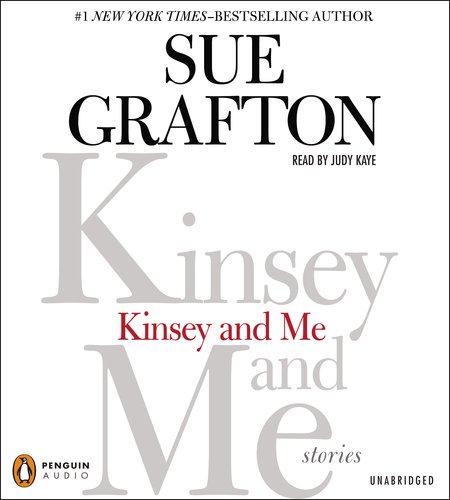
 Kinsey and Me: Stories
by Sue Grafton
Narrated by Judy Kaye
Genre: Short Stories
Publisher: Penguin Audio
Publish Date: January 8, 2013
Format: Audio, 7 hours | 31 minutes
Audio Listening Level: Easy
Rating: 3½ of 5
Publisher’s Synopsis:
Kinsey and Me has two parts: The nine Kinsey stories (1986-93), each a gem of detection; and the And Me stories, written in the decade after Grafton’s mother died. Together, they show just how much of Kinsey is a distillation of her creator’s past even as they reveal a child who, free of parental interventions, read everything and roamed everywhere. But the dark side of such freedom was that very parental distance.
My Thoughts:
As a long time fan of the Kinsey Millhone series and someone who enjoys short stories, I was happy to see this new arrival. I did, for the most part, enjoy the book but it was not quite what I was expecting. The Kinsey short stories, while entertaining, are not the same depth as her novels and wrapped up a little too quickly. Regardless, it was nice spending a few hours with Kinsey as she deftly solved the cases.
The second part, a series of vignettes told by Kit Blue, what author Grafton refers to as her alter ego, was at times painful to listen to. Drawn from her own past, she describes life with two alcoholic parents, her mother’s death at a young age from cancer, and her father’s ultimate remarriage. These early experiences obviously had a huge influence on her and affected many of the decisions she made in her own life. However cathartic it was for her to write, for this listener it was sad, depressing and at times disturbing; an unexpected change in style after listening to the light-hearted Kinsey Millhone mysteries.
The audio production was easy to listen to and nicely performed by Judy Kaye. When moving from Kinsey to the Kit Blue Vignettes in the second half, she added just the right amount of emotion and passion to her voice to let the listener know that this was no longer the no-nonsense detective Kinsey speaking.
Fans of the series and of the author will probably enjoy this book with the second half providing much insight into the author’s past and what shaped her future. New readers will get a glimpse at Kinsey Millhone, but I recommend they also pick up one of the earlier Alphabet Books to really enjoy her at her best.
——————————–
Source: Review copy
© 2013 Under My Apple Tree. All rights reserved.
Mailbox Monday
 Mailbox Monday was created by The Printed Page. It is the gathering place for readers to share the books that came into their home last week.
Mailbox Monday is currently on tour, hosted by a different blog each month. The March host is Caitlin @ chaotic compendiums.
Last week was a slow reading week but a good week for the mailbox.
From the publicist for review:
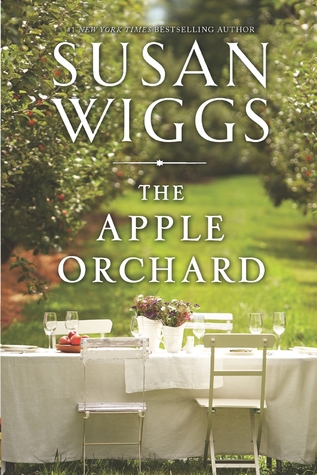 The Apple Orchard
by Susan Wiggs
Tess Delaney makes a living restoring stolen treasures to their rightful owners. People like Annelise Winther, who refuses to sell her long-gone mother’s beloved necklace-despite Tess’s advice. To Annelise, the jewel’s value is in its memories. But Tess’s own history is filled with gaps: a father she never met, a mother who spent more time traveling than with her daughter. So Tess is shocked when she discovers the grandfather she never knew is in a coma. And that she has been named in his will to inherit half of Bella Vista, a hundred-acre apple orchard in the magical Sonoma town called Archangel.
For review from AmazonVine:
 Exploding the Phone: The Untold Story of the Teenagers and Outlaws who Hacked Ma Bell
by Phil Lapsley
Before smartphones, back even before the Internet and personal computer, a misfit group of technophiles, blind teenagers, hippies, and outlaws figured out how to hack the world’s largest machine: the telephone system. Exploding the Phone tells this story in full for the first time. It traces the birth of long-distance communication and the telephone, the rise of AT&T’s monopoly, the creation of the sophisticated machines that made it all work, and the discovery of Ma Bell’s Achilles’ heel. more
From the author for review (ebook):
 The Knightmare
by Deborah Valentine
Historical time travel fantasy…
France, 1209: A Knight Templar riding through an eerie forest is suddenly attacked by an assassin as a man and woman watch from a distant hillside. When his death seems certain, the woman takes up a sword… Present, Formula 1 race, Magny Cours: Observed by the very same couple, Conor Westfield, a career-obsessed Scottish driver, is in a horrible racing accident. Miraculously, he survives what seemed to be certain death…more
On 3/11 and 3/14 there will be a free promotion for the Kindle ebook.
Two audiobooks for review from Penguin Audio:
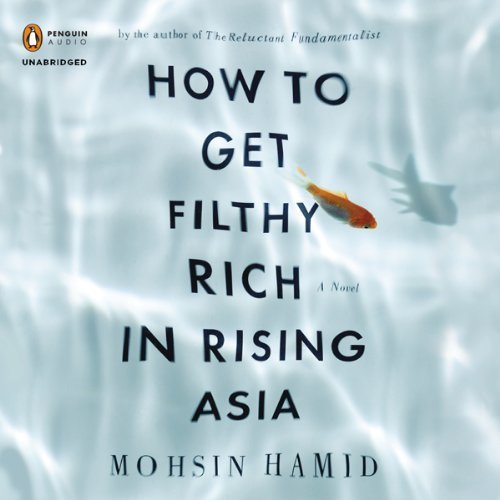 How to Get Filthy Rich In Rising Asia
by Mohsin Hamid
the astonishing and riveting tale of a man’s journey from impoverished rural boy to corporate tycoon, it steals its shape from the business self-help books devoured by ambitious youths all over “rising Asia.” It follows its nameless hero to the sprawling metropolis where he begins to amass an empire built on that most fluid, and increasingly scarce, of goods: water. Yet his heart remains set on something else, on the pretty girl whose star rises along with his…
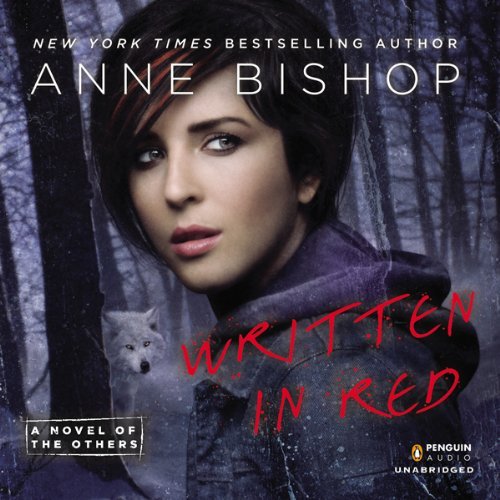 Written In Red
by Anne Bishop
As a cassandra sangue, or blood prophet, Meg Corbyn can see the future when her skin is cut—a gift that feels more like a curse. Meg’s Controller keeps her enslaved so he can have full access to her visions. But when she escapes, the only safe place Meg can hide is at the Lakeside Courtyard—a business district operated by the Others.
————–
It’s Monday! What Are You Reading?
 It’s Monday! What Are You Reading? is hosted by Sheila at Book Journey.
Share what you read last week and what you are currently reading.
Last week
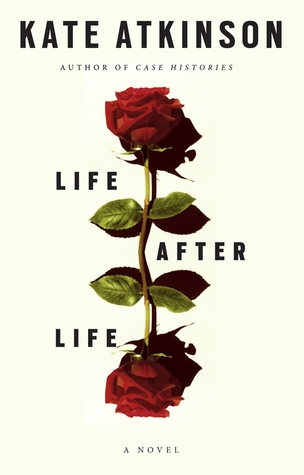
I finished the audio of Kinsey and Me by Sue Grafton and started reading Life After Life by Kate Atkinson.
It was a slow reading week for fiction as I spent a good amount of time with a pile of library books offering a wide range of advice on how to update my resume for today’s job market. Oddly enough the most helpful was the insultingly titled, The Complete Idiot’s Guide to the Perfect Resume.
I posted three reviews:
The Urban Hermit by Sam MacDonald
The World Until Yesterday by Jared Diamond
The National Geographic Bird-Watcher’s Bible edited by Jonathan Alderfer.
The winner of the giveaway for a copy of The Mapmaker’s War is Susanna P. @ SusieBookworm.
This week
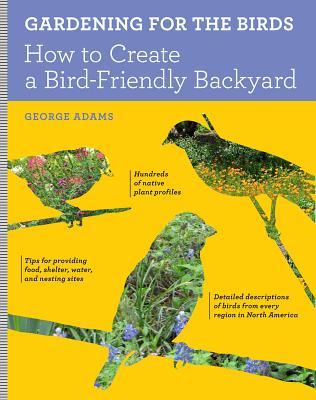
I plan on finishing Life After Life by Kate Atkinson and Gardening for the Birds, and listening to Farside by Ben Bova. Next in line is either Unremembered by Jessica Brody or The Lost Art of Mixing by Erica Bauermeister.


What are you reading?
——————————–
© 2012 Under My Apple Tree. All rights reserved.
One of the citizen science projects I participate in is Project NestWatch, a nationwide monitoring program designed to track status and trends in the reproductive biology of birds. Nests are monitored by volunteers every three or four days and observations are recorded on the NestWatch website.
Before you can monitor a nest you need to know where to find them. Winter is the best time to learn where to look for nests. They are much easier to find after the leaves have dropped off the trees and shrubs. Most birds will not re-use an old nest, but they may build a new one close by or in a similar tree or location.
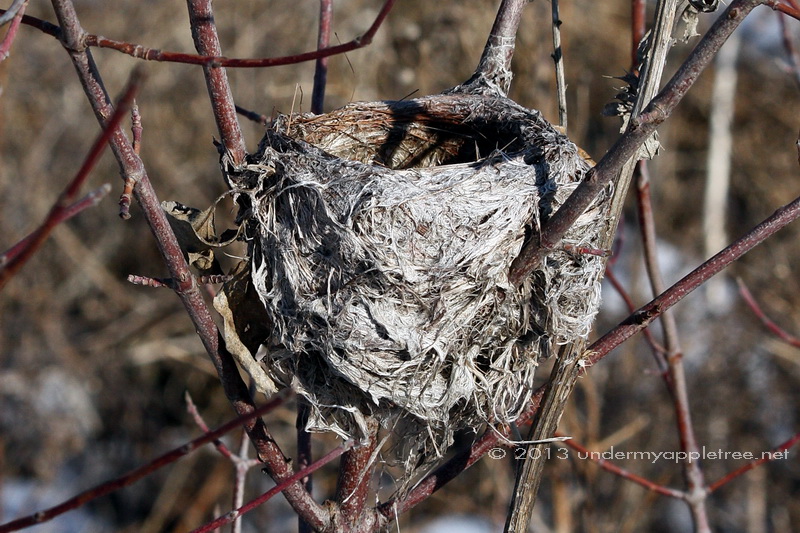
I found the nest above a few weeks ago while walking around the frozen pond along my favorite trail. I must have walked past it several times a week last summer and never noticed it when the birds were there so I’m not sure who built it. From the tiny size and its location in a small shrub, about three feet off the ground, it could be a Hummingbird nest.
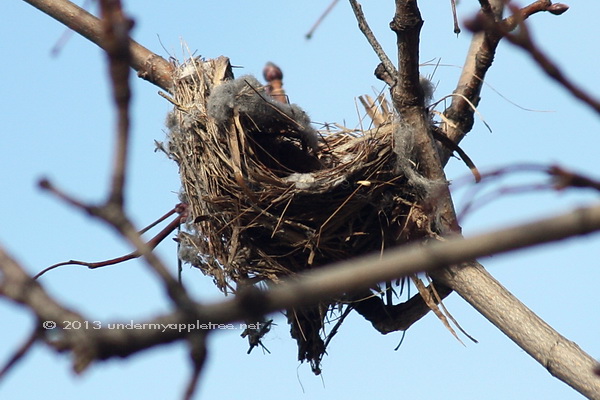
Above is an American Goldfinch nest. It was in the Maple tree in my front yard. I knew the birds were there but I couldn’t spot the nest until the leaves fell from the tree.
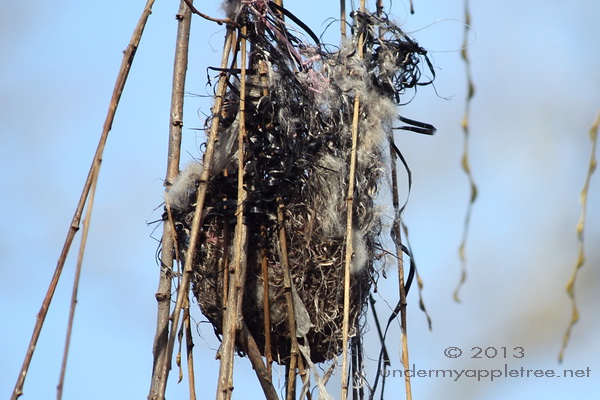
This is an Oriole nest. It was in a Willow tree near a large pond. Their nests are built like a hanging basket, usually woven out of plant material. Sometimes they incorporate artificial fibers such as twine, cellophane or ribbons.
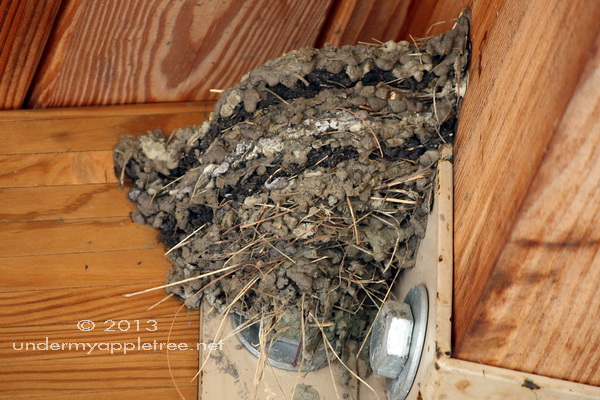
This nest was built by Barn Swallows and was one of the nests I monitored last summer. It was in the roof of a pavilion in a local park. They will also build in the eaves and rafters of barns and sheds and under bridges. The nest is constructed of mud pellets mixed with grass stems. Occasionally they will re-use a nest but more commonly they will build a new one a few feet away on a nearby beam. I’ve monitored several nests in this pavilion.
Project Nestwatch is open to most anyone in the US that would like to volunteer to be a monitor. Check out the NestWatch website for more information.
Saturday Snapshot is hosted by Alyce at At Home With Books. Visit her blog to see more great photos or add your own.
© 2013 Under My Apple Tree. All rights reserved.
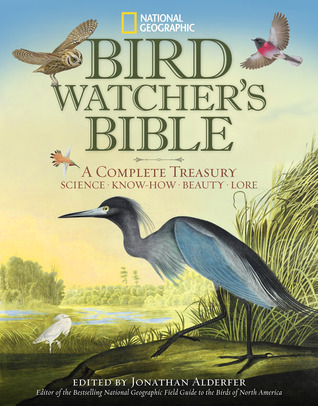 Bird-Watcher’s Bible
Edited by Jonathan Alderfer
Genre: Science, Non-Fiction
Publisher: National Geographic Society
Publish Date: October 2, 2012
Format: Hardcover | 416 pages
Rating: 5 of 5
From the front cover …
Whether you’re a beginning birder, a seasoned expert, or just an admirer from afar, Bird-Watcher’s Bible brings it all home blending art, science, history, folklore, and fun in one delightful volume.
One of my favorite birding field guides is published by National Geographic so it’s no surprise I thoroughly enjoyed paging through the recently published Bird Watcher’s Bible. Natural history writers and bird experts have joined together to share their knowledge in this beautiful volume.
The book presents a variety of information laid out in an attractive, enticing format, perfect for browsing through the pages. This is not intended as a field guide to identify birds. It is more like a modern-day encyclopedia with a wealth of information. The artwork is gorgeous with beautiful color photos and illustrations. The text consists of brief narratives and, scattered throughout, numerous sidebars containing interesting facts, anecdotes and lists.
A few interesting anecdotes:
The calming effect of birdsong may be the reason that the crime rate dipped in Lancaster, a high desert city near Los Angeles. In 2011, the town installed 70 speakers along half a mile of its main thoroughfare and piped in a dulcet chorus of songs, chirps, and tweets — minor crime fell 15% and major crimes were down 6%.
Alfred Hitchcock’s 1963 file The Birds was inspired by real-life events around Monterey Bay, California, in 1960 when dying and disoriented seabirds flew into homes.
One of the recurring sidebar factoids was a series on the derivation of a bird’s name. If you listen closely, some birds will tell you their names.
For example, the eastern Phoebe calls out fee-be, the Eastern Wood Pewee says pee-a-wee, and the Blue Jay shrieks a piercing jay, jay jay.
Enjoyable, entertaining and at times amusing, this very readable book is not just for bird enthusiasts. Highly recommended for readers of all ages and levels who enjoy nature and the wonder and joy of birds.
——————————–
© 2013 Under My Apple Tree. All rights reserved.
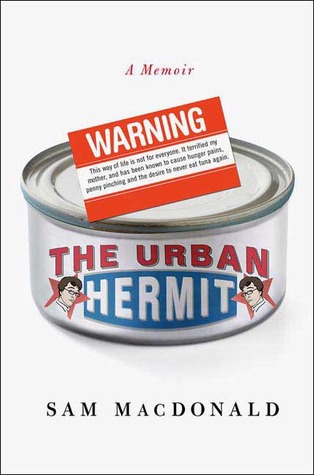 The Urban Hermit: A Memoir
by Sam MacDonald
Genre: Memoir
Publisher: St. Martin’s Press
Publish Date: November 25, 2008
Format: Hardcover | 304 pages
Rating: 3½ of 5
From the Publisher’s Synopsis:
Faced with the truth that his debts and his waistline had both ballooned out of control, Sam MacDonald devised a plan to change his life. [In] April 2000 … Sam got his wake-up call. He weighed 340 lbs. He was flat broke. And the IRS had caught up with him. In a desperate attempt to save himself, Sam decided to limit himself to a budget of $8 a week and 800 calories a day. He called it “The Urban Hermit Plan.” He thought he would do it for a month. Instead, he embarked on a bizarre year-long journey.
My Thoughts:
I will occasionally read a memoir usually because it’s written by a celebrity that I like or is about a subject I enjoy. Neither of those criteria applied to this book but since it was my book club’s pick for the March discussion I decided to give it a chance.
This book was nothing like what I expected and in a good way. You can’t judge a book by its cover and apparently not by its synopsis either. I was anticipating a serious (and possibly boring) discussion on how Sam embarked on a diet program while at the same time learning to manage his money. Not quite! It was a fun read but also mesmerizing in the same way we are tempted to stop and stare at a train wreck even though we know we should keep moving.
Weight loss was not Sam’s goal; getting out of debt was the motivation and he did it by eating the cheapest food he could find, lentils and tuna. Everyday. For a month. Ewwwwh. No more drinking; no more drugs; live like a hermit. He survived, but at the end of the month another expense cropped up and he extended the plan another month, then two months, and eventually a year. Along the way the pounds keep coming off.
The story was written in a conversational, free-flowing style that kept me turning the pages. Did I think he was crazy? Yes, I did. The entire idea was insane but I was hooked on the story. Offbeat, crazy and with a touch of juvenile humor, this was an uplifting story about determination and the ability to accomplish the seemingly impossible if we try hard enough.
——————————–
Source: Public Library.
© 2013 Under My Apple Tree. All rights reserved.
Almost wordless: Series of shots of my backyard taken throughout the day. We’ve received our entire season of snowfall in the past few weeks.
——————————–
More Wordless Wednesday. © 2013 Under My Apple Tree. All rights reserved.
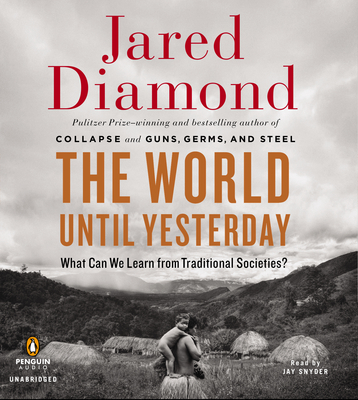 The World Until Yesterday
by Jared Diamond
Narrated by Jay Snyder
Genre: Non-Fiction
Publisher: Penguin Audio
Publish Date: December 31, 2012
Format: Audio, 18 hours | 31 minutes
Audio Listening Level: Easy – Intermediate
Rating: 4½ of 5
Publisher’s Synopsis:
The World Until Yesterday provides a mesmerizing firsthand picture of the human past as it had been for millions of years—a past that has mostly vanished—and considers what the differences between that past and our present mean for our lives today. This is Jared Diamond’s most personal book to date, as he draws extensively from his decades of field work in the Pacific islands, as well as evidence from Inuit, Amazonian Indians, Kalahari San people, and others. Diamond doesn’t romanticize traditional societies—after all, we are shocked by some of their practices—but he finds that their solutions to universal human problems such as child rearing, elder care, dispute resolution, risk, and physical fitness have much to teach us.
My Thoughts:
I have always had a strong interest in the sciences so it wasn’t a big surprise to me that I liked this book, but I didn’t expect it to be so interesting. The subject matter is at times complex, but it’s well-written in an easy to follow style that’s perfect for the layperson. Yes, the material can be a little dry and the first few chapters were slow, but once we got into the details I was caught up in the narrative.
The book explores the theory that we have changed our societies and how we live faster than our bodies have evolved and adapted to modern conditions. The human race has existed for tens of thousands of years but only recently moved from a primitive, tribal society to today’s modern cities and states. The author offers a range of examples and explanations while comparing modern society, described by the acronym WEIRD (western, educated, industrialized, rich, democratic), which derives from an article on behavior and brain science, to those people still living in, or recently removed from, traditional society.
Psychologists mainly study the human nature of WEIRD societies; the author demonstrates why we need to expand our view into other groups of people. Some of the areas I found particularly interesting were the contrasting ways different groups treated children from childbirth to parenting. In some societies infanticide, an unthinkable practice in WEIRD societies, is still condoned. One example would be only caring for the stronger twin when the mother does not have enough food for two babies. Another area of interest to me was elder care and the way traditional families have multi-generational households and support systems in place. Empty-nest syndrome is unknown to them.
Most fascinating of all were the chapters on our modern world diseases such as diabetes, heart disease, and obesity, virtually unknown in traditional societies but occurring at a rapid rate in groups of people who adopt a western lifestyle. In a nutshell, the theory is that through years of evolution we are predisposed to store fats and sugar which protects the individual from starvation during lean times when crops often failed and food was scarce. Today our high fat diet is causing an epidemic of disease.
The audio, narrated by Jay Snyder, was presented in a documentary-like style. His friendly voice and engaging manner made 18½ hours of listening a pleasant experience. I glanced through a copy of the hardcover print book which is large, about 500 pages, and I doubt I would have been able to read through all that text with the same enjoyment as I did listening to it. With the audio I felt like I was listening to a National Geographic or Nature special. However, the downside to the audio instead of the print is not being able to read faster to skip ahead to the conclusion at the end of chapters that were less interesting.
Although this book is not for everyone, I highly recommend it to science and non-fiction fans, especially those with an interest in anthropology or evolutionary biology, and even the casual listener might be pleasantly surprised.
——————————–
Source: Review copy
© 2013 Under My Apple Tree. All rights reserved.


 Under My Apple Tree